LASER TALKS NOMAD: PLANTS AND PLANTING

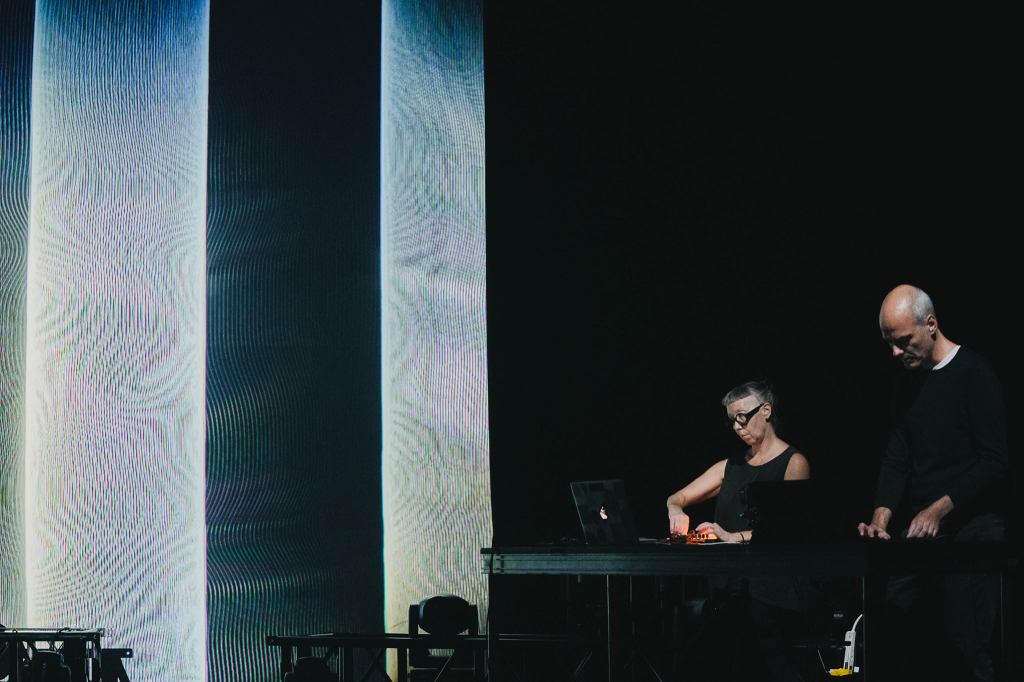
Photo Credit: Luca Forcucci

RSRV uqbt at gmai dot com

In collaboration with IOPENER AND CAFé BOTANICO

Moderation

Luca Forcucci (LASER NOMAD / ubqtlab.org) + Oliver Juan (Iopener)

Invited Speakers

Ana Hupe + Maykson Cardoso

Topics

Plants and Forest Intelligence

Schedule

3/5pm Moderated discussion

Location

Café Botanico

Richardstraße 100, 12043 Berlin

Introduction

Plants have inspired movies, countless poetry, or paintings among many others art forms. The realm of plants occupies way more space on earth than humans or any animal presence, and will probably be the last presence on earth when our atmosphere becomes inhabitable and hostile to any life forms.

The idea of plant intelligence has generated heated debates, and plant neurobiology has been proposed by Brenner et Al. (1). If intelligence is understood as a capability to adapt to a situation, then plants might be intelligent and thus might not need neurons nor brains. However, in a letter signed by 36 scientists (2), it was claimed that “we begin by stating simply that there is no evidence for structures such as neurons, synapses or a brain in plants.”For this LASER Nomad in Berlin, where it is based, we team with Iopenerart, an organisation operating in the area of ecological behaviour, and with Café Botanico, which focuses on permaculture, gardening techniques and food. We invite an artist, Ana Hupe, and an art critic Maykson Cardoso to address questions about plants, forests and gardens.

References

Alpi, Amedeo et al. 2017. Plant neurobiology: no brain, no gain? Trends in Plant Science, 12 (4): 135-6

Brenner ED, Stahlberg R, Mancuso S, Vivanco J, Baluska F, Van Volkenburgh E. 2006. Plant neurobiology: an integrated view of plant signaling. Trends Plant Science, 11(8):413

Text: Luca Forcucci 

Invited Speakers:

Ana Hupe (1983) is visual artist as well as Associate Researcher and Lecturer in Art History at Burg Giebichenstein Kunsthochschule Halle, Germany. She is a doctor in Fine Arts by Federal University of Rio de Janeiro, with a one-year PhD internship at University of the Arts (UdK), Berlin. Hupe’s artistic practice is research-based, process-oriented and often in dialogue with other disciplines and people. Her projects rewrite histories of resistance in installations with plural narratives, attentive to blind spots of representations, building counter-memories to colonial archives. Her work employs a wide range of techniques and media, including lens-based media, writing, printmaking and sculpture.

Tropisms [seclusion, trap or burst], Poetics of Relation and Migratory Movements
Consciousness is only possible through change,
 Change is only possible through movement .- 
Aldous Huxley, The Art of Seeing


Many tropical plants have fascinating movements with various purposes: defense against herbivores, capturing light or dispersing seeds. Mimosa Pudica, or the Touch-me-not, is one of the best-known moving plants; its leaves react immediately to human touch and close, or fall asleep. Encounters with the power to generate transformative reactions have been described by Édouard Glissant as the Poetics of Relation (1990), a philosophy of encounters and movement, of finding ways to coexist. 

Like the restless seeds of the Impatiens Walleriana, which accumulate bit by bit until an external contact–an insect or the wind–make them explode and be thrown far away, this presentation visits vocabularies borrowed from biology to refer to human migratory movements. The terms “invasion”, “native”, “exotic” are some of those that cross the two fields. Migration is more than just a movement derived from necessity, it is a human characteristic. From a bio-inspired perspective, we will reflect at some dynamics of adaptation, resistance and transformations in human societies based on mass migratory movements and how they are framed in public discourses.

Text: Ana Hupe

Maykson Cardoso (Brazil, 1988) is a poet, essayist, art critic and translator, and has previously worked as an independent curator. He is a PhD candidate in Visual Arts/Art History at the Federal University of Rio de Janeiro. His research focuses on Walter Benjamin’s work, approaching it through the motive of archaeology to articulate an “archaeology of violence/Gewalt”.

From Hortus Conclusus to Tropical Forest:Against the Western Notion of Heritage For a Radical Concept of Justice

By analysing pre-Renaissance paintings depicting horti conclusi and other types of medieval walled gardens, we can identify certain elements that expose the Western way of relating to nature. In this presentation, I propose juxtaposing these images with others that represent or document Amazonian Indigenous communities living within the forest. This juxtaposition allows us to evaluate the effects of the clash between these two worldviews, from the invasion of the Americas to contemporary land disputes involving Indigenous peoples, land grabbers, and large landowners in Brazil. The Yanomami shaman Davi Kopenawa refers to non-Indigenous peoples as the “people of merchandise”, thus denouncing the centrality of capitalism in our way of life and our relationship with nature—viewing it solely as a source of extraction for finite natural resources and, consequently, as an “inexhaustible” supply of commodities. Kopenawa’s critique can be linked to the writings of Walter Benjamin, particularly On the Concept of History (1940) and his Notes Toward a Study on the Category of Justice (undated). In the former text, Benjamin fiercely critiques the “ideology of progress” underpinning the political projects of both the left and the right in the West—an ideology still evident in the colonial mindset embodied, for instance, in Brazil’s positivist national motto, “order and progress.” In the latter, Benjamin asserts that “justice is the striving to make the world into the highest good,” proposing a radical inversion of the Western legal paradigm. Rather than basing justice on property rights—which he considers inherently unjust—he advocates for recognising the intrinsic right of the good to belong to itself. By connecting the critiques of Kopenawa and Benjamin, we can envision alternative ways of engaging in politics that are less centred on disputes over property, while also calling into question our notions of heritage, legacy, and justice.

Text: Maykson Cardoso

Partners
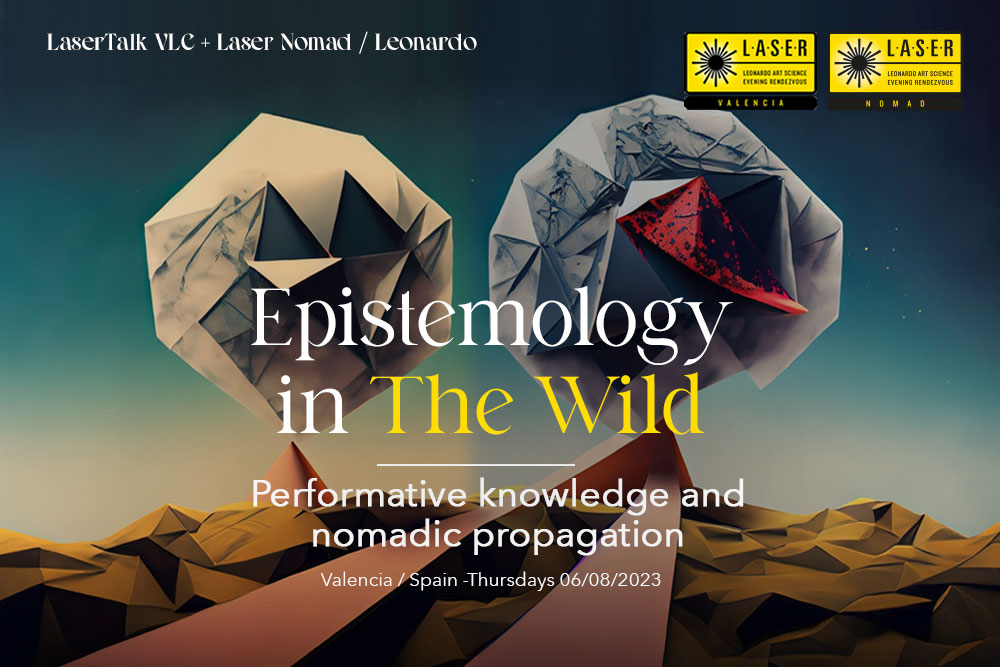
LASER Talks Nomad: Epistemology in The Wild

Photo Credit: AI- Adobe Firefly + Moisés Mañas

In collaboration with LASER VALENCIA

Moderation

Luca Forcucci (LASER NOMAD / ubqtlab.org) + Moisés Mañas (UPV) + Guillermo Muñoz (UV)

Invited Speakers

Paz Tornero + Alberto Conejero

Topics

Ecology of epistemologies, impacts of ‘into the wild’ methodologies

Performance AV / Sonic Rituals

Composition and Performance: Luca Forcucci

Visuals: Paz Tornero + Jorge Dabaliña

Schedule

7pm Moderated discussion

8.30 pm Concert

Location

la fabrica de hielo

C/ de Pavia, 37, 46011 València

Introduction (Spanish below)

Performative knowledge resides in the idea a continuum, an epistemology ‘in the making’, an epistemology of wandering without stable states of equilibrium, leading to nomadic propagation ‘in the wild’. In this discussion, which is as an encounter between two LASER Talks, one NOMAD and the one based in Valencia, we explore why an epistemology ‘in the wild’, namely developed outside controlled environments, brings different results than a framed one. The idea beyond LASER Nomad is a living, developing organism and system. In reference to the term ecosophy by Félix Guattari, the notion is within site-specific situations (environments) according to encounters in specific geographic nodes (social relationships) to develop ideas emerging from the encounters between ancestral cultures and ancestral indigenous epistemology and contemporary ones (human subjectivity). However, it must be underlined that a global system with global solutions is not what is envisioned here; instead, the promotion of an ecosystem of knowledges local and site specific. All knowledge systems are local, including art and sciences. In the current world, many challenges are rapidly appearing and increasing (e.g. environmental issues; the movement of diasporas, authoritarian and retrograde political influences). What is the wild ? Why it may well changes our epistemologies and ontologies ? for who and from whom?

Text: Luca Forcucci 

(Español)

El conocimiento en acción, performativo, se asienta sobre un principio de desplazamiento continuo. Una epistemología “en hacer”, errante y apartada de los estados estables de equilibrio. Una epistemología que viaja de forma nómada propagándose “en lo salvaje”. En el debate que ofrecemos, un encuentro entre dos nodos LASER (Nomad + Valencia) exploramos por qué esa epistemología en estado salvaje, aquella alejada de los entornos controlados, nos proporciona resultados muy distintos de la que permanece fiel a un marco estático. La figura que da forma al proyecto LASER Nomad es la de organismo y sistema vivo en permanente desarrollo. La identidad del proyecto LASER es la multiplicidad forjada mediante la acogida y la diferencia. Usando el término “ecosofía” de Félix Guattari, el principal registro son los ambientes situados [el medio ambiente], para poner en correspondencia a nodos geográficos específicos [relaciones sociales]. Con esta descomposición emergen ideas desde el encuentro entre los saberes y epistemologías ancestrales e indígenas y las defendidas por el norte geográfico [subjetividad humana]. Pero conviene advertir que esta reunión no tratará de construir y edificar un sistema de soluciones globales, sino más bien la promoción de una ecología del conocimiento de programas que siempre serán situados y locales. Todos los sistemas de conocimiento son locales, incluidas las artes y la ciencias. El mundo de hoy queda atravesado por múltiples retos que piden una atención y análisis cada vez a mayor ritmo: el autoritarismo, las diásporas, las crisis climáticas multidimensionales, la vigilancia y la transformación digital, la pérdida de sentido o nuestra relación con la imagen de nuestros futuros, … En este contexto nuestras preguntas son: ¿qué es lo salvaje? ¿por qué “lo salvaje” puede cambiar nuestras epistemologías y ontologías? ¿para quién y por quién?

Texto: Luca Forcucci 

Invited Speakers:

Paz Tornero

Paz Tornero is a Ph.D. in Art, Science and Technocreativity at Complutense University of Madrid. Her thesis is about the relationship between art, science and creativity from 20th century to present and it explores new art forms that incorporate technological and scientific aspects. She has an MA in Fine Arts and Digital Arts from Pompeu Fabra University and a BFA in Fine Arts from Polytechnic University of Valencia. She also studied at Carnegie Mellon University (USA). She was a visiting fellow at Harvard University as well as MIT Media Lab, to expand her knowledge by studying the innovative educational program Idea Translation Lab, led by scientist David Edwards and supported by the Le Laboratoire art center in Paris. Also, visiting researcher at the Massachusetts Institute of Technology (MIT) in its notorious Media Lab center, where she had the honor of being Antoni Muntadas and Krzysztof Wodiczko’s student. She teaches seminars and writes about science, digital art, dance, theatre, humanities, and transdisciplinarity research-learning. Her projects have been showed in international festivals and galleries. She has been artist-in-residence in important programs such as: The Finnish Bioart Society in Finland; a stay on research, ecology and artistic production in the Arctic Circle. Artist-in-Residence for the investigation of transdisciplinary methodologies at the Casa Tres Patios Cultural Foundation in Medellín, Colombia. Or, NIDA SummerSchool for Artistic Research at NIDA Art Colony in Lithuania”. She has been artist-in-residence in ArtScience programs. Currently, she is Associate Professor at the Faculty of Fine Arts, University of Granada in Spain.

Artist and professor expert in theory and practice related to the synergies between Art-Science-Technology. Catching the attention of scientists and collaborating with them in their laboratories is something she is definitely very passionate about. She calls herself the “intruder artist”, which she defines as a visitant-invader of scientific spaces with the goal of understanding their processes and generating new knowledge in between disciplines. 

Alberto Conejero

J. Alberto Conejero has a degree in Mathematics from the Universitat de València (1998) and PhD in Applied Mathematics from the UPV (2004), with the Extraordinary Thesis Award. He also holds a Master’s degree in Bioinformatics and Biostatistics by the Universitat Oberta de Catalunya and the Universitat de Barcelona (2020). He is currently Professor of Applied Mathematics at the Escuela Técnica Superior de Informática (ETSINF) of the UPV. He is also a researcher at the Institute of Pure and Applied Mathematics (IUMPA), director of the Master’s Degree in Mathematical Research, director of the Department of Applied Mathematics and coordinator of department directors at the UPV. Previously, he has held the positions of Vice-Dean of the ETSINF (former Faculty of Computer Science) (2004-2009), Secretary of the Strategic Plan Commission for the period 2007-2014 (2005-2007). Director of the Academic Performance and Curricular Evaluation of Students Curricular Evaluation of Students (2009-2013) and Deputy Secretary General (2013-2016).

He has taught for more than 20 years different mathematics courses: Algebra, Mathematical Analysis, Discrete Mathematics, Graph Theory, Network Science and Data Science Projects in Computer Science and Data Science degrees. He has also taught Biology, Synthetic Biology, Soft Skills, and Art and Science at the UPV. He is the author of two MOOCs in edX, which were awarded by Universia and Telefónica (2013). In addition, he has received the Teaching Excellence Award from the Social Council of the UPV (2014).

His research activity began in the areas of Functional Analysis and Operator Theory in Mathematics, combining it later with interdisciplinary collaborations in various fields.
He is the author of more than 120 research papers published in research journals and international conferences. In addition, he has carried out short stays in the following academic institutions: Bowling Green (OH) and Kent (OH) (USA), Lecce (Italy), Academy of Sciences of Prague (Czech Rep.), and Tübingen (Germany).

Eduardo Reck Miranda: The power of music in the brain, brain music interfaces, Bio and quantum computing.

The mystery of the music in the brain is far from being understood. Through his career and while exploring brain music interfaces, quantum computing, cognition and biocomputers, Eduardo Reck Miranda take us into a field of possibilities for the future (of) music. Unlocking new opportunities and crossing boundaries of medical science and arts, we here discuss why music technology offers (again) new perspectives for music composition.

Eduardo Reck Miranda / Interview by Luca Forcucci – January 2023 / Berlin

Eduardo Reck Miranda’s distinctive music is informed by his unique background as an Artificial Intelligence (AI) scientist and classically trained composer. He is internationally known for his research in neurotechnology for music and is championing investigation into quantum computing for musical creativity. Eduardo was a research scientist in the evolution of language group at Sony CSL Paris. He is a professor at the University of Plymouth, UK, where he leads the Interdisciplinary Centre for Computer Music Research (ICCMR). Currently, he is working with Quantinuum to develop applications of quantum computing in music. His opera ‘Lampedusa’, composed with sonification of subatomic particle collisions and live-electronics was premiered by BBC Singers.

LASER Nomad: Roadmaps for Art and Science Research into Ancestral Knowledge

New paper, just out of the oven: In 2015, after having successfully passed my PhD, I was invited for an art & science residency named Scientific Delirium, Madness (!!!) in the Silicon Valley, by the Djerassi Foundation and Leonardo / ISATS. I spent one month in a beautiful landscape with the Pacific ocean on the horizon, and with very talented artists and scientists (13). During that time, I worked on a composition involving the body of a dancer as the sonic source, a sculpture inside a tree with a sculptor, and I developed the initial ideas for my very own lab, www.ubqtlab.org. Since then, the project, LASER NOMAD, has traveled over four continents. I finished a paper about the story of this project that can be find here, and it will be published later on print.

https://direct.mit.edu/leon/article-abstract/doi/10.1162/leon_a_02354/114426/LASER-Nomad-Roadmaps-for-Art-and-Science-Research?redirectedFrom=fulltext

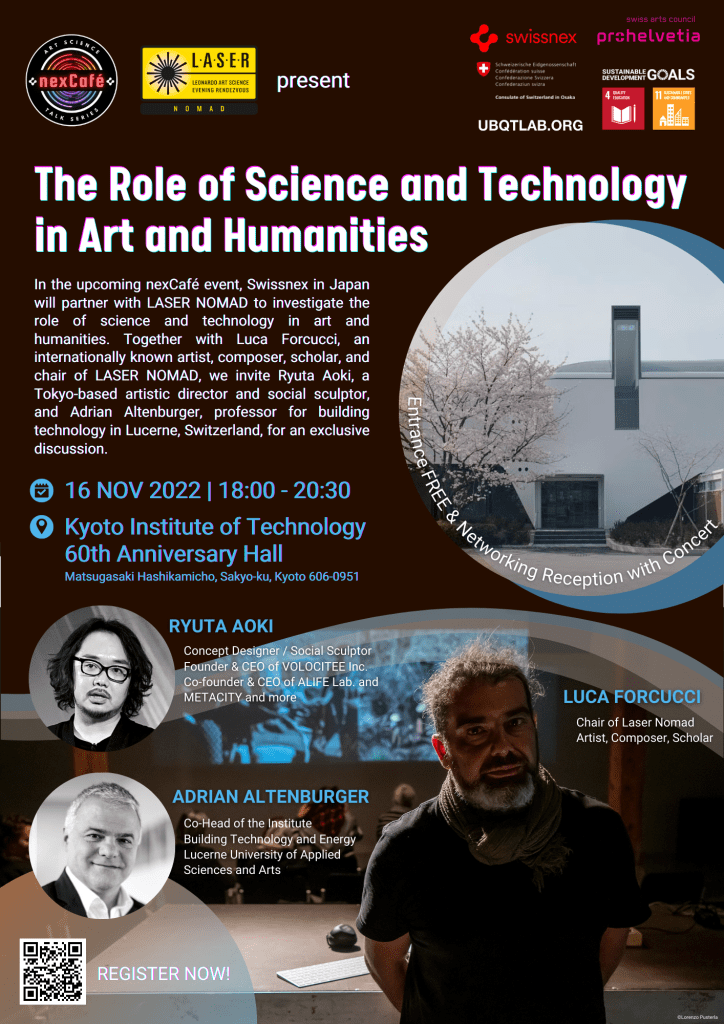
LASER Nomad OSAKA: The Role of Science and Technology in Art and Humanities

In collaboration with nexCafé event, Swissnex in Japan

When

November 16th, 2022 from  6:00 PM to  9:00 PM (Kyoto)

Location

1F, 1 Chome-13-22 Sonezakishinchi, Kita Ward
WeWork Midosuji Frontier
Osaka, 27 530-0002
Japan

What

The first Japanese edition of LASER NOMAD continues its investigation and critic of the implicit biases found in academic publishing, or the disconnect between work within a university and that going on outside, by decompartmentalizing knowledge, namely by creating bridges, and here asking what is the role of science and technology in art and humanities. The quest relates to interdisciplinarity, and indisciplinarity generated by art and science collaborations. Such pervasive fields are now mostly approached from a techno-scientific and Western perspective, and looking outside well established Western academic methodologies, focusing on the rituals involved within such collaboration through a nomad lab as mobile and multi-sited ethnography might lead to new questions and answers.

We investigate the role of science and technology in art and humanities. We invite Ryuta Aoki, a Tokyo-based artistic director and social sculptor, and Adrian Altenburger, professor for building technology in Lucerne, Switzerland, for an exclusive discussion.

18:00-18:10 Welcome and Intro
18:10-19:00 Presentation
19:00-19:20 Discussion
19:20-21:00 Networking Reception with music performance by Luca Forcucci / The Room Above

Who

Ryuta Aoki | 青木竜太

Tokyo-based artistic director and social sculptor. I have been creating invisible structures that maximize people’s creativity to explore the form of “society as it could be” that terraforms cultural deserts into cultural forests. I currently plans, designs, directs and implements research projects, exhibitions, and artworks in the interdisciplinary art and science technology field.

Adrian Altenburger

Professor and Head of Institute / Course Building Technology and Energy at the Lucerne University of Applied Sciences and Arts since 2015. Former partner, board member and co-owner Amstein+Walthert AG from 1999-2015.
Lecturer and adjunct professor in the field of energy and building services engineering in Switzerland and abroad (ETH Zurich, HTW Chur, Harvard University – Graduate School of Design and Harvard University – Extension School, University of Zurich, Kyoto Institute of Technology).

Moderator: Fiammetta Pennisi / Art & Science Swissnex Japan


CHAIRED BY:

Luca Forcucci

France Jobin: The Sonic, the architecture and the quantum physics

France Jobin has a long career in experimental music. She introduces her works as related to the sonic and architecture, and how she developed works inspired and informed by quantum physics, including the challenges induced by art and science collaborations

France Jobin / Interview by Luca Forcucci – November 2021 / Berlin – Montréal

Biography

“This album seems to mark a shifting in Jobin’s sound, one that departs from the strictly ultra-minimal ethos she’s known for, and I for one am excited to hear where this goes.

Darren McClure
Intrication, No.
Toneshift (December 2018)


“We detect imperceptible subsurface discolourations, brief dissipations of energy across the harmonic flawlessness, a few dynamic weaknesses and slight distortions in an otherwise rather narcotic flux. It’s sorrow-inducing, brain-quietening, and profoundly individual.

Massimo Ricci
Death is perfection, everything else is relative EMEGO 276
Touching Extremes (July 2020)

France Jobin is a sound / installation / artist, composer and curator residing in Montreal, Canada. Her audio art can be qualified as “sound-sculpture”, revealing a minimalist approach to complex sound environments where analog and digital intersect. Her installations express a parallel path, incorporating both musical and visual elements inspired by the architecture of physical spaces. Her works can be “experienced” in a variety of unconventional spaces and new technology festivals across Canada, the United States, South America, South Africa, Europe, Australia, Japan and South Corea. Since 2009, her focus has been related to
Quantum mechanics. Many of her projects are inspired by theories related to topics such as vacuum decay, string theory and more recently, what she feels to be the most perplexing phenomenon in the world of the quantum , entanglement resulting in a first presentation, Entanglement A/V, with visual artist Markus Heckmann, which delves into the realms of quantum physics premiered at Mutek Mtl 2021.


In November 2019, she presented her first modular concert (Buchla 100) at the Ernst Krenek Institute in Austria. Jobin has created solo recordings for Editions Mego(AT), No-ware (CL-DE), Silent Records (USA), popmuzik records (JP), bake/ staalplaat (NL), ROOM40 (AU), nvo (AT), DER (US), ATAK (JP), murmur records (JP), Baskaru (FR) and the prestigious LINE label
(US). Jobin’s sound art is also part of countless compilation albums, notably on the ATAK (JP), bremsstrahlung (US), Mutek (CA), murmur records (JP), and/oar (US), tsuku boshi (FR), everest records (CH), and Contour Editions (US) labels. She is also featured in the influential book and recording, Extract, Portraits of Soundartists (book + 2 cd), released on the nonvisualobjects label (AT). The collaborative album ligne, created with sound artist Tomas Phillips, was released on the ATAK label (JP) and her recent collaboration with acclaimed artist Richard Chartier, DUO, is released on the mAtter label in Japan.


DUO A/V premiered at Mutek Mtl 2019 with sound artist Richard Chartier and visual artist Markus Heckmann and was presented at the Precxte festival in South Corea.
Her installations and screenings have been shown internationally at museums and festivals. Her work P Orbital released on LINE (Valence, LINE054) was presented in the context of ESCUCHAS, a first sound art exhibit for the Museum of Modern Art in Medellin, Colombia. P Orbital was also presented at CONTEXT-ing / Listening as CONTEXT at the Miami Art Fair in Florida, Call &Response, London Uk as well as at the Haunted formalism exhibit in LA curated by Volume. An invitation to the AIR Artist-In-Residence program in Krems, Austria enabled her to create und transit, a sound installation set in the MinoritenKirche cloister in Stein (AT) and und transit.03 has been presented in the sound art exhibit “Dock” at the Ancien Palais de Justice in Lièges, Belgium.


Her two ongoing collaborations with visual artist Cédrick Eymenier (FR) have resulted in EVENT HORIZON, an audio/video piece, and The Answer, a movie, with the soundtrack by France Jobin and Stephan Mathieu. EVENT HORIZON was screened in Paris
(2010), at the Venezuela Biennale in Merida state (2010) and was performed live at the Torrance Art Museum in Los Angeles (2010) and ISEA RUHR 2010 (DE). The Answer was screened at IAC, Villeurbanne, France in March – May 2016. In 2011, Jobin was
one of five international artists selected to present her sound installation, Entre-Deux, in the new media exhibit Data/Fields, curated by Richard Chartier at Artisphere in the Washington, DC area, along with Ryoji Ikeda, Mark Fell, Caleb Coppock, and Andy Graydon. Her proposition received critical acclaim from the national press. Entre-Deux was presented at N38E13 in
Palermo, Sicily (2017). She premiered the audio visual performance of “intrication” at Mutek AR 2018 with the Argentinian visual duo prifma. Her audio visual collaboration: “Mirror Neurons” with sound artist Fabio Perletta (IT) and xx+xy visuals (IT) was screened as a world premiere at A x S / ak-sis / FESTIVAL 2014 | CURIOSITY as part of the Synergetica Screening in Los Angeles in September 2014. In October 2015, France was invited to take part in an artist residency at EMPAC (Troy,NY) which resulted in the creation of a new light sound
work entitled 4.35 – R0 – 413, a collaboration with Alena Samoray, lighting designer.


Her latest installations, ‘Inter/sperse’ and ‘Entre/temps’ both premiered in Italy. ‘Inter/sperse’ is a site specific installation created in the context of an international residency organized by Museolaboratorio, LUX and farmacia901. It opened May 27 2017 at Museolaboratorio, Città Sant’Angelo Italy. ‘Entre/temps’ is a site specific installation commissioned by Enzo De Leonibus, artistic director of the EaRrEtMeI festival which opened in Palena, Itally, June 4 2017.


She has also participated in numerous music and new technology festivals such as Mutek (Montreal, 2001, 2004 – 2009, 2014, 2017, 2019 AR 2018), Festival Novas Frequencies (Rio, Brazil, 2019) Prectxe (South Korea, 2019), Interference (Austin, 2019), Suoni Per Il Popolo (Montreal 2019), EM15 (Montreal 2014), EMPAC (US 2011, 2015), roBOT 8 (Italy 2015) Angelica Festival (Italy 2016), Portobeseno (Italy 2014), Interferenze – Liminaria (Italy 2014), Flussi Media Arts Festival (Italy 2014), FIMAV, SEND + RECEIVE (Winnipeg, 2003, 2005), Club Transmediale (Berlin, 2004), Shut up and Listen (Vienna, 2009), ISEA RUHR 2010
(Germany), the surface tension tour (Japan, 2012) and the Symétrie tour (Japan 2016).

“immersound” is a concert event/philosophy concept initiated by Jobin, which proposes the creation of a dedicated listening environment by focusing on the physical comfort of the audience within a specifically designed space. The premise of “immersound” is to seek out/explore new perceptions in and experiences of the listening process by pushing the notion of “immersion” to its possible limits. She created and produced “immersound” from 2011 to 2015 at Oboro in Montreal.


She was a finalist at the Sonic Arts Awards 2014 (IT) in the Sonic Research category. In January 2013, the Conseil québécois de la musique (CQM) awarded the prestigious Opus Prize for Concert of the year to France Jobin for her concert at AKOUSMA 8.


Jobin’s work continues to evolve as technologies enable her to create new environments.
France Jobin is published by Touch Music/Fairwood Music UK Ltd

Links

Entanglement AV: https://youtu.be/WSjp4qxPQYg


Science: 

Death is perfection, everything else is relative:https://francejobin.bandcamp.com/album/death-is-perfection-everything-else-is-relative?label=502986885&tab=music

The fluidity of time does not exist: https://francejobin.bandcamp.com/album/the-fluidity-of-time-does-not-exist

Music

10-33cm https://francejobin.bandcamp.com/album/10-33cm

SUPPORT

As a non profit project promoting knowledge and education, any support helps to provide new content and develop future ideas. Thanks

CHF 10.00

Maria Mannone: Physics, Music, art, gestures and on being fascinated

Maria Mannone describes the links between her professional backgrounds as physicist, musician, composer, conductor, and how it inspired her to define links between proportions found in nature, and mathematics toward music and the visual arts. This includes projects exploring sonification, a method to render data audible, in the medical domain.

Maria Mannone / Interview by Luca Forcucci – November 2021 / Berlin – Palermo

Maria Mannone is a theoretical physicist and composer. She gained her MSc in Theoretical Physics and three masters in Piano, Composition and Orchestral Conducting in Italy, her Master 2 ATIAM at IRCAM-UPMC Paris VI Sorbonne, and her Ph.D. in Composition in the US, at the University of Minnesota. Her interdisciplinary research deals with music, mathematics, and forms of nature. She invented the “CubeHarmonic”, a new musical instrument based on the Rubik’s cube. She is currently postdoctoral researcher at the University of Palermo and “subject expert” at Ca’ Foscari University of Venice. Her most recent books are “Mathematics, Nature, Art” and “Simmetrie fra Matematica e Musica” (Palermo University Press).

Links to her work

– A Fight for Light: https://www.youtube.com/watch?v=PS1iLgSieyo
– Gondola in musica: https://www.youtube.com/watch?v=vS5nIvrr_pI&t=2s
– Musiche per una scena di Buster Keaton: 
https://www.youtube.com/watch?v=lqPT32eY8vI&t=2s
– Improvvisazione libera: https://www.youtube.com/watch?v=1OClm1pn7-g
– Improvvisazione su paesaggio sonoro: 
https://www.youtube.com/watch?v=oMldYLbfIRE

SUPPORT

As a non profit project promoting knowledge and education, any support helps to provide new content and develop future ideas. Thanks

CHF 10.00

Urgent Since a Long Time Now

[Anti]disciplinary Topographies

Urgent Since a Long Time Now

A Sonic Collage & Cut Up & Cut Away

USE HEADPHONES !

The power of the voice (s) allied with poetry and (deep) listening are perhaps ways to deal with urgent terrestrial and human problems caused to the biosphere, which have been urgent for a long time now.

The work is a sonic collage, like a surrealist poem based on podcasts conducted since 2018 and available at www.ubqtlab.org. The platform engages with interdisciplinary and transnational collaborations in an attempt to decolonize knowledge. It proposes a unique combination of fields, such as ritual studies, anthropology, phenomenology, cognitive science, technology, poetry and the sonic arts, and allows for the mechanisms of listening and questions about phenomenal consciousness to be addressed from a sonic perspective by fusing theoretical writing with sonic artworks as research-creation. It also counterbalances a dominant visual and Western, techno-scientific perspective.

Luca Forcucci (CH/IT): Distinguished artist and scholar. His research observes the perceptive properties and the field of possibilities of the first-person experience, which is explored as an artwork. Forcucci is interested in perception, subjectivity and consciousness. His installations, performances, electroacoustic compositions, photography and texts have been exhibited worldwide on a regular basis. Since 2009, he has collaborated with scientists in the field of cognitive science. He is particularly fascinated by visual mental imagery and the sonic imagination to explore the conceptual idea of the sonic architecture. www.lucaforcucci.com

Credits

With the voices of Jocy de Oliveira (BR), JIll Scott (AU), Pamela Z (US), Jorge Antunes (BR), Stanley Moss (US), Phill Niblock (US), Matt Black (UK), Paulo Bruscky (BR), Eduardo Kac (BR)

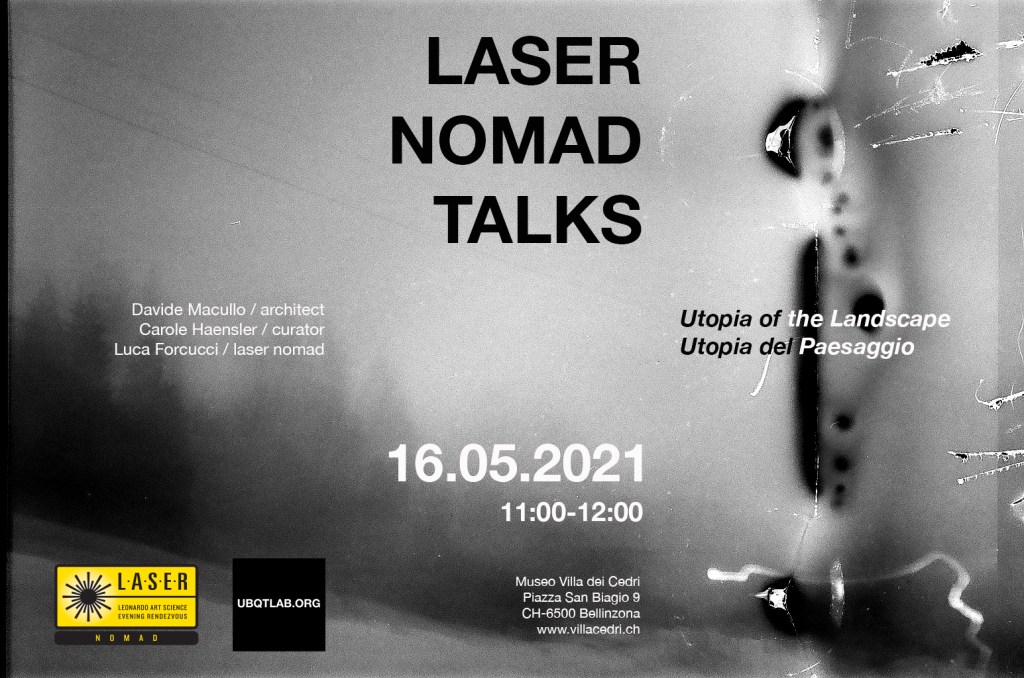
LASER Nomad Bellinzona / Utopia of the Landscape

16.05.2021 / 11:00 – 12:00 / Museo Villa dei Cedri – Bellinzona

Piazza San Biagio 9 – 6500 Bellinzona  – Svizzera

Machines, algorithms and data are increasingly entering the landscape. They are already present in our intimate spaces. During the current pandemic situation, algorithms and data are omnipresent due to our online presence. Further, our landscape is indeed becoming monasterial, because the pandemic forces populations to self-isolate. The utopian landscape is perhaps within oneself then ?

Ticino is the Italian speaking and southern part of Switzerland. In term of transit (cultural and economic), it plays a role as a geographical articulation between North and South of Europe. Inside, deep inside, in the entrails of the landscape of Ticino, the new world longest 57 km long railway San Gottardo tunnel was recently achieved. A utopian invisible landscape made by men and machines. On the surface, the Ticino architecture school is widely acclaimed worldwide since the 1960’s, an architecture, which has been described also as an architecture of resistance. In addition, since the early 1900’s the artistic avant-garde was indeed present in Ticino with the Dadaists for example, and Bauhaus architecture emerged there too between the two world wars. What to expect from an architecture when insights from augmented intelligence, cognition, data and machines are applied to it ? What kind of utopian landscape shall emerge in a not so distant future ?

Davide Macullo (b. Giornico, CH, 1965) is a Swiss architect. His international design studio, Davide Macullo Architects, based in Lugano, Switzerland, was founded in 2000.

The ethos of the studio is one that promotes an open and cultural exchange with architects, artists and collaborators coming from different backgrounds. The diverse contributions promote a dialogue between the specificity of the project, the universality of the contexts and the psychology of space. This ‘drawing from context’ encourages and helps sustain a local-meets-global, embracing approach to architecture, spanning from the theoretical to the practical and detail level, to territorial analysis, pedagogy and sustainability in construction.

The work of the studio includes graphic design, branding consulting and custom designed furniture, and spans to the creation of contemporary art collections for clients. They have also recently produced a customized collection of rugs for the new Chenot Palace Weggis, and a large series of Davide’s drawings (ca. 400nr.) is included in its art collection.

In Rossa, Canton Grisons, he is a founding member of the Rossarte foundation which promotes public and private interventions in situ by international artists to influence daily life through contemporary art.

The first building is the Swisshouse XXXII (Sinusoïde) created in collaboration with Daniel Buren and Mario Cristiani of Galleria Continua.

Prior to the foundation of his own studio, he was project architect in the atelier of Mario Botta with responsibility for over 200 international projects worldwide (1990-2010).

abstract

We are living in an historical moment of epochal change, where the attitude to inhabit the earth, built over millennia, does not reflect the current and future conditions. With the advent of new technologies, unimaginable scientific discoveries and the doubling of the world population, man faces, (with no way back), a completely new universe, in which he must affront from all points of view, taking care of all ecologies. Our generation has the urgent duty to prepare this new territory to allow new generations build on solid foundations and above all for our psychological health, manage an environment that has become extremely complex and potentially hostile.

The development of think tanks and laboratories focused on social sensitivity, inclusive of historical and scientific knowledge, are the terrain on which we move to respond to the call as citizens. The Rossa project in Valle Calanca seeks solutions that go beyond the economic revival of a region, bowing to the principle expressed by Bruno Munari, that a civilized people lives in the midst of their art.

Carole Haensler, born in Lausanne in 1974, was appointed curator of the Museo Civico Villa dei Cedri in Bellinzona in 2013, with the task of conserving and enhancing the artistic heritage of the Museum, redefining and strengthening the identity of the institution, developing the offer of cultural mediation as well as synergies with other city and regional cultural institutions. She also accompanied the creation of the Ente autonomo di diritto pubblico Bellinzona Musei – the new administrative structure created in 2017 that manages the Museo Villa dei Cedri – of which she is director since 1.01.2018.

Holder of a master’s degree in art history and archaeology from the University of Neuchâtel (1999), she has worked for various private and public collections in Switzerland, as well as the Thyssen-Bornemisza Foundation in Lugano and Thyssen-Bornemisza Art Contemporary – TBA21 -, Vienna, the Zentrum Paul Klee in Bern and the Centre for Contemporary Art in Geneva. She is mainly specialized in modern and contemporary art, in particular in French art and literature of the second half of the 19th century and in French and German art of the period 1900-1950, and focussed her programme at Museo Villa dei Cedri on the renewal of art language and expression after Second World War. She has introduced thematic exhibitions of contemporary art in Bellinzona seeking to reflect the concerns of art and contemporary society: “Dimensione Disegno. Posizioni contemporanee” (2016), “In(de)finiti luoghi. Utopie architettoniche e realtà artistiche” (2017), “Memoria del Sublime. Il paesaggio nel secolo XXI” (2019) e “Icone vegetali. Arte e botanica nel secolo XXI” (to come in 2022).

abstract

The Museo Villa dei Cedri is an interesting starting point to understand how to connect artistic, architectural and natural heritage. Starting from the considerations that led to the thematic exhibitions “Memoria del Sublime. Il paesaggio nel secolo XXI” (2019) and “Icone vegetali. Arte e Botanica nel secolo XXI” (to come in spring 2022), the presentation will also explore the role of the museum in its own ecosystem, which is that of art, and its ability to position itself as a place of critical reflection on contemporary society. Does the Museum have a role to play in building the future of society? And can it be an active role?

Chair: Luca Forcucci