Plants have inspired movies, countless poetry, or paintings among many others art forms. The realm of plants occupies way more space on earth than humans or any animal presence, and will probably be the last presence on earth when our atmosphere becomes inhabitable and hostile to any life forms.
The idea of plant intelligence has generated heated debates, and plant neurobiology has been proposed by Brenner et Al. (1). If intelligence is understood as a capability to adapt to a situation, then plants might be intelligent and thus might not need neurons nor brains. However, in a letter signed by 36 scientists (2), it was claimed that “we begin by stating simply that there is no evidence for structures such as neurons, synapses or a brain in plants.”For this LASER Nomad in Berlin, where it is based, we team with Iopenerart, an organisation operating in the area of ecological behaviour, and with Café Botanico, which focuses on permaculture, gardening techniques and food. We invite an artist, Ana Hupe, and an art critic Maykson Cardoso to address questions about plants, forests and gardens.
References
Alpi, Amedeo et al. 2017. Plant neurobiology: no brain, no gain? Trends in Plant Science, 12 (4): 135-6
Brenner ED, Stahlberg R, Mancuso S, Vivanco J, Baluska F, Van Volkenburgh E. 2006. Plant neurobiology: an integrated view of plant signaling. Trends Plant Science, 11(8):413
Text: Luca Forcucci
Invited Speakers:
Ana Hupe(1983) is visual artist as well as Associate Researcher and Lecturer in Art History at Burg Giebichenstein Kunsthochschule Halle, Germany. She is a doctor in Fine Arts by Federal University of Rio de Janeiro, with a one-year PhD internship at University of the Arts (UdK), Berlin. Hupe’s artistic practice is research-based, process-oriented and often in dialogue with other disciplines and people. Her projects rewrite histories of resistance in installations with plural narratives, attentive to blind spots of representations, building counter-memories to colonial archives. Her work employs a wide range of techniques and media, including lens-based media, writing, printmaking and sculpture.
Tropisms [seclusion, trap or burst], Poetics of Relation and Migratory Movements Consciousness is only possible through change, Change is only possible through movement .- Aldous Huxley, The Art of Seeing
Many tropical plants have fascinating movements with various purposes: defense against herbivores, capturing light or dispersing seeds. Mimosa Pudica, or the Touch-me-not, is one of the best-known moving plants; its leaves react immediately to human touch and close, or fall asleep. Encounters with the power to generate transformative reactions have been described by Édouard Glissant as the Poetics of Relation (1990), a philosophy of encounters and movement, of finding ways to coexist.
Like the restless seeds of the Impatiens Walleriana, which accumulate bit by bit until an external contact–an insect or the wind–make them explode and be thrown far away, this presentation visits vocabularies borrowed from biology to refer to human migratory movements. The terms “invasion”, “native”, “exotic” are some of those that cross the two fields. Migration is more than just a movement derived from necessity, it is a human characteristic. From a bio-inspired perspective, we will reflect at some dynamics of adaptation, resistance and transformations in human societies based on mass migratory movements and how they are framed in public discourses.
Text: Ana Hupe
Maykson Cardoso (Brazil, 1988) is a poet, essayist, art critic and translator, and has previously worked as an independent curator. He is a PhD candidate in Visual Arts/Art History at the Federal University of Rio de Janeiro. His research focuses on Walter Benjamin’s work, approaching it through the motive of archaeology to articulate an “archaeology of violence/Gewalt”.
From Hortus Conclusus to Tropical Forest:Against the Western Notion of Heritage For a Radical Concept of Justice
By analysing pre-Renaissance paintings depicting horti conclusi and other types of medieval walled gardens, we can identify certain elements that expose the Western way of relating to nature. In this presentation, I propose juxtaposing these images with others that represent or document Amazonian Indigenous communities living within the forest. This juxtaposition allows us to evaluate the effects of the clash between these two worldviews, from the invasion of the Americas to contemporary land disputes involving Indigenous peoples, land grabbers, and large landowners in Brazil. The Yanomami shaman Davi Kopenawa refers to non-Indigenous peoples as the “people of merchandise”, thus denouncing the centrality of capitalism in our way of life and our relationship with nature—viewing it solely as a source of extraction for finite natural resources and, consequently, as an “inexhaustible” supply of commodities. Kopenawa’s critique can be linked to the writings of Walter Benjamin, particularly On the Concept of History (1940) and his Notes Toward a Study on the Category of Justice (undated). In the former text, Benjamin fiercely critiques the “ideology of progress” underpinning the political projects of both the left and the right in the West—an ideology still evident in the colonial mindset embodied, for instance, in Brazil’s positivist national motto, “order and progress.” In the latter, Benjamin asserts that “justice is the striving to make the world into the highest good,” proposing a radical inversion of the Western legal paradigm. Rather than basing justice on property rights—which he considers inherently unjust—he advocates for recognising the intrinsic right of the good to belong to itself. By connecting the critiques of Kopenawa and Benjamin, we can envision alternative ways of engaging in politics that are less centred on disputes over property, while also calling into question our notions of heritage, legacy, and justice.
Performative knowledge resides in the idea a continuum, an epistemology ‘in the making’, an epistemology of wandering without stable states of equilibrium, leading to nomadic propagation ‘in the wild’. In this discussion, which is as an encounter between two LASER Talks, one NOMAD and the one based in Valencia, we explore why an epistemology ‘in the wild’, namely developed outside controlled environments, brings different results than a framed one. The idea beyond LASER Nomad is a living, developing organism and system. In reference to the term ecosophy by Félix Guattari, the notion is within site-specific situations (environments) according to encounters in specific geographic nodes (social relationships) to develop ideas emerging from the encounters between ancestral cultures and ancestral indigenous epistemology and contemporary ones (human subjectivity). However, it must be underlined that a global system with global solutions is not what is envisioned here; instead, the promotion of an ecosystem of knowledges local and site specific. All knowledge systems are local, including art and sciences. In the current world, many challenges are rapidly appearing and increasing (e.g. environmental issues; the movement of diasporas, authoritarian and retrograde political influences). What is the wild ? Why it may well changes our epistemologies and ontologies ? for who and from whom?
Text: Luca Forcucci
(Español)
El conocimiento en acción, performativo, se asienta sobre un principio de desplazamiento continuo. Una epistemología “en hacer”, errante y apartada de los estados estables de equilibrio. Una epistemología que viaja de forma nómada propagándose “en lo salvaje”. En el debate que ofrecemos, un encuentro entre dos nodos LASER (Nomad + Valencia) exploramos por qué esa epistemología en estado salvaje, aquella alejada de los entornos controlados, nos proporciona resultados muy distintos de la que permanece fiel a un marco estático. La figura que da forma al proyecto LASER Nomad es la de organismo y sistema vivo en permanente desarrollo. La identidad del proyecto LASER es la multiplicidad forjada mediante la acogida y la diferencia. Usando el término “ecosofía” de Félix Guattari, el principal registro son los ambientes situados [el medio ambiente], para poner en correspondencia a nodos geográficos específicos [relaciones sociales]. Con esta descomposición emergen ideas desde el encuentro entre los saberes y epistemologías ancestrales e indígenas y las defendidas por el norte geográfico [subjetividad humana]. Pero conviene advertir que esta reunión no tratará de construir y edificar un sistema de soluciones globales, sino más bien la promoción de una ecología del conocimiento de programas que siempre serán situados y locales. Todos los sistemas de conocimiento son locales, incluidas las artes y la ciencias. El mundo de hoy queda atravesado por múltiples retos que piden una atención y análisis cada vez a mayor ritmo: el autoritarismo, las diásporas, las crisis climáticas multidimensionales, la vigilancia y la transformación digital, la pérdida de sentido o nuestra relación con la imagen de nuestros futuros, … En este contexto nuestras preguntas son: ¿qué es lo salvaje? ¿por qué “lo salvaje” puede cambiar nuestras epistemologías y ontologías? ¿para quién y por quién?
Paz Tornero is a Ph.D. in Art, Science and Technocreativity at Complutense University of Madrid. Her thesis is about the relationship between art, science and creativity from 20th century to present and it explores new art forms that incorporate technological and scientific aspects. She has an MA in Fine Arts and Digital Arts from Pompeu Fabra University and a BFA in Fine Arts from Polytechnic University of Valencia. She also studied at Carnegie Mellon University (USA). She was a visiting fellow at Harvard University as well as MIT Media Lab, to expand her knowledge by studying the innovative educational program Idea Translation Lab, led by scientist David Edwards and supported by the Le Laboratoire art center in Paris. Also, visiting researcher at the Massachusetts Institute of Technology (MIT) in its notorious Media Lab center, where she had the honor of being Antoni Muntadas and Krzysztof Wodiczko’s student. She teaches seminars and writes about science, digital art, dance, theatre, humanities, and transdisciplinarity research-learning. Her projects have been showed in international festivals and galleries. She has been artist-in-residence in important programs such as: The Finnish Bioart Society in Finland; a stay on research, ecology and artistic production in the Arctic Circle. Artist-in-Residence for the investigation of transdisciplinary methodologies at the Casa Tres Patios Cultural Foundation in Medellín, Colombia. Or, NIDA SummerSchool for Artistic Research at NIDA Art Colony in Lithuania”. She has been artist-in-residence in ArtScience programs. Currently, she is Associate Professor at the Faculty of Fine Arts, University of Granada in Spain.
Artist and professor expert in theory and practice related to the synergies between Art-Science-Technology. Catching the attention of scientists and collaborating with them in their laboratories is something she is definitely very passionate about. She calls herself the “intruder artist”, which she defines as a visitant-invader of scientific spaces with the goal of understanding their processes and generating new knowledge in between disciplines.
J. Alberto Conejero has a degree in Mathematics from the Universitat de València (1998) and PhD in Applied Mathematics from the UPV (2004), with the Extraordinary Thesis Award. He also holds a Master’s degree in Bioinformatics and Biostatistics by the Universitat Oberta de Catalunya and the Universitat de Barcelona (2020). He is currently Professor of Applied Mathematics at the Escuela Técnica Superior de Informática (ETSINF) of the UPV. He is also a researcher at the Institute of Pure and Applied Mathematics (IUMPA), director of the Master’s Degree in Mathematical Research, director of the Department of Applied Mathematics and coordinator of department directors at the UPV. Previously, he has held the positions of Vice-Dean of the ETSINF (former Faculty of Computer Science) (2004-2009), Secretary of the Strategic Plan Commission for the period 2007-2014 (2005-2007). Director of the Academic Performance and Curricular Evaluation of Students Curricular Evaluation of Students (2009-2013) and Deputy Secretary General (2013-2016).
He has taught for more than 20 years different mathematics courses: Algebra, Mathematical Analysis, Discrete Mathematics, Graph Theory, Network Science and Data Science Projects in Computer Science and Data Science degrees. He has also taught Biology, Synthetic Biology, Soft Skills, and Art and Science at the UPV. He is the author of two MOOCs in edX, which were awarded by Universia and Telefónica (2013). In addition, he has received the Teaching Excellence Award from the Social Council of the UPV (2014).
His research activity began in the areas of Functional Analysis and Operator Theory in Mathematics, combining it later with interdisciplinary collaborations in various fields. He is the author of more than 120 research papers published in research journals and international conferences. In addition, he has carried out short stays in the following academic institutions: Bowling Green (OH) and Kent (OH) (USA), Lecce (Italy), Academy of Sciences of Prague (Czech Rep.), and Tübingen (Germany).
New paper, just out of the oven: In 2015, after having successfully passed my PhD, I was invited for an art & science residency named Scientific Delirium, Madness (!!!) in the Silicon Valley, by the Djerassi Foundation and Leonardo / ISATS. I spent one month in a beautiful landscape with the Pacific ocean on the horizon, and with very talented artists and scientists (13). During that time, I worked on a composition involving the body of a dancer as the sonic source, a sculpture inside a tree with a sculptor, and I developed the initial ideas for my very own lab, www.ubqtlab.org. Since then, the project, LASER NOMAD, has traveled over four continents. I finished a paper about the story of this project that can be find here, and it will be published later on print.
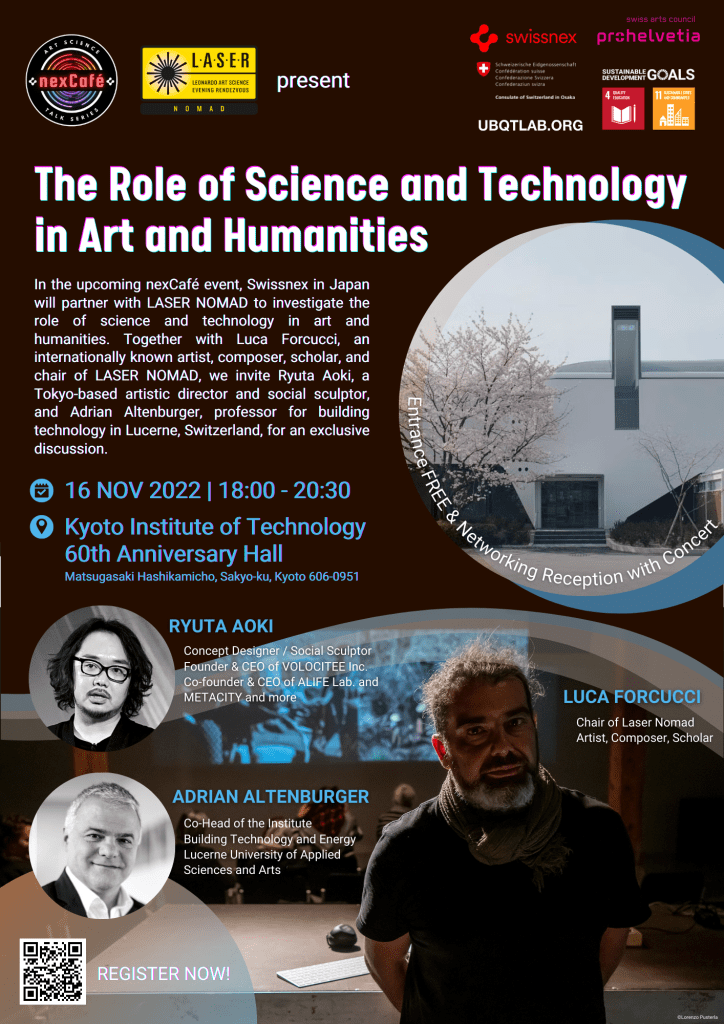
In collaboration with nexCafé event, Swissnex in Japan
When
November 16th, 2022 from 6:00 PM to 9:00 PM (Kyoto)
Location
1F, 1 Chome-13-22 Sonezakishinchi, Kita Ward WeWork Midosuji Frontier Osaka, 27 530-0002 Japan
What
The first Japanese edition of LASER NOMAD continues its investigation and critic of the implicit biases found in academic publishing, or the disconnect between work within a university and that going on outside, by decompartmentalizing knowledge, namely by creating bridges, and here asking what is the role of science and technology in art and humanities. The quest relates to interdisciplinarity, and indisciplinarity generated by art and science collaborations. Such pervasive fields are now mostly approached from a techno-scientific and Western perspective, and looking outside well established Western academic methodologies, focusing on the rituals involved within such collaboration through a nomad lab as mobile and multi-sited ethnography might lead to new questions and answers.
We investigate the role of science and technology in art and humanities. We invite Ryuta Aoki, a Tokyo-based artistic director and social sculptor, and Adrian Altenburger, professor for building technology in Lucerne, Switzerland, for an exclusive discussion.
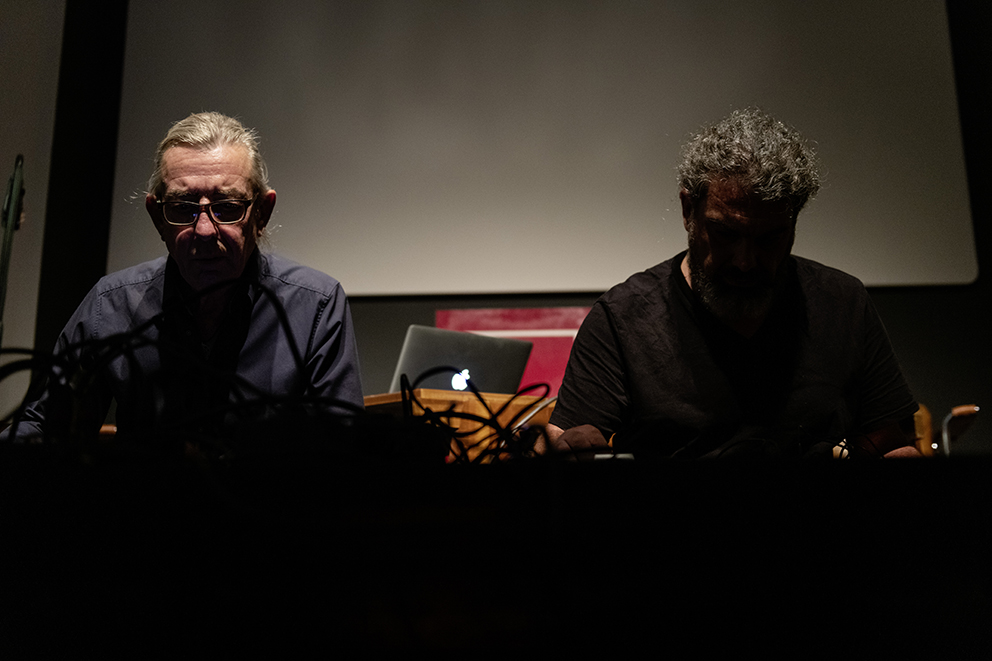
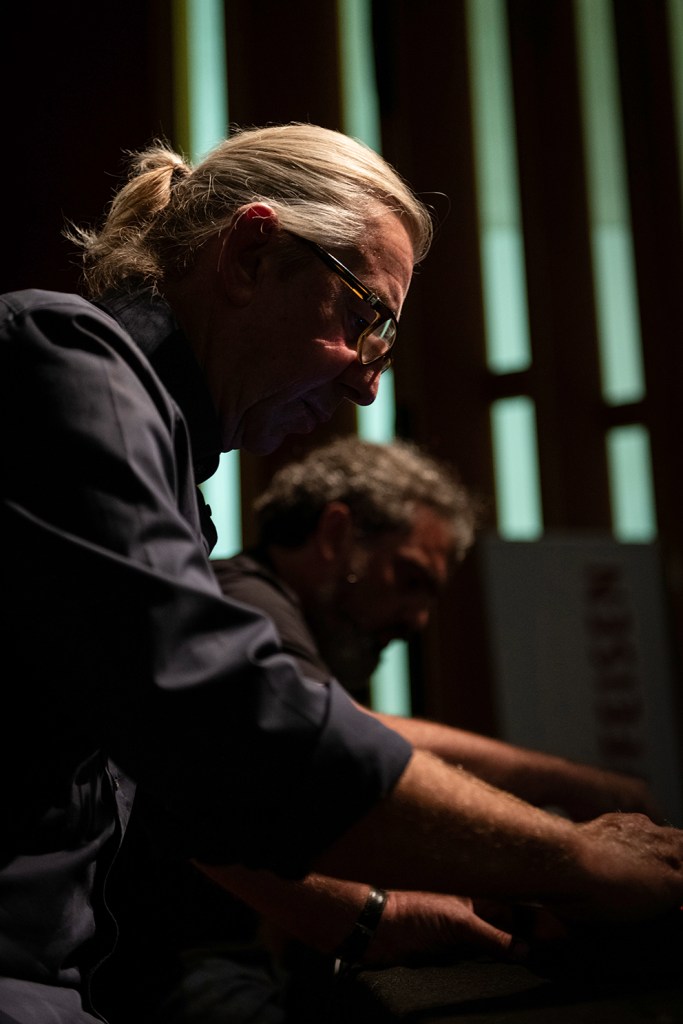
18:00-18:10 Welcome and Intro 18:10-19:00 Presentation 19:00-19:20 Discussion 19:20-21:00 Networking Reception with music performance by Luca Forcucci / The Room Above
Tokyo-based artistic director and social sculptor. I have been creating invisible structures that maximize people’s creativity to explore the form of “society as it could be” that terraforms cultural deserts into cultural forests. I currently plans, designs, directs and implements research projects, exhibitions, and artworks in the interdisciplinary art and science technology field.
Professor and Head of Institute / Course Building Technology and Energy at the Lucerne University of Applied Sciences and Arts since 2015. Former partner, board member and co-owner Amstein+Walthert AG from 1999-2015. Lecturer and adjunct professor in the field of energy and building services engineering in Switzerland and abroad (ETH Zurich, HTW Chur, Harvard University – Graduate School of Design and Harvard University – Extension School, University of Zurich, Kyoto Institute of Technology).
Laser CYLAND and Laser NOMAD have decided to collaborate based on the field of possibilities and potentials of collective endeavours. The term inception suggests a beginning, after the pandemic and other events having brought some lives to an end, the idea of a new start promotes hope. It may also allude to several layers of ideas, dreams or realities. Humanity finds itself in a peculiar situation, movement is certainly more restricted. The issues the world will experience when life goes back to ‘normal’, whatever that may be, and to which kind of normality, are as yet unknown and unknowable. Globality will probably be reconsidered and reshaped. Nevertheless, it seems that we need to continue to dream and reinvent a new future, one that, it is hoped, will avoid dystopian realities. Transformations in Sound Art and in the Sonic Arts tend to be invisible, but not immaterial. Fermentation processes may also be used as a modification of matter to create something new in visual, digital, and sound art.
Luca Forcucci, artist, scholar and guest professor, observes perceptive properties of the first person experience through large scale installations, compositions, video, photography and writing. The research investigates mental imagery of sonic architectures. The works were held at Ars Electronica Linz, Biennale del Mediterraneo Palermo, Museo Reina Sofia Madrid, Centro Hélio Oiticica Rio de Janeiro, The Lab San Francisco, Rockbund Museum Shanghai, MAXXI Rome, or Akademie der Künste Berlin. His plateform UBQTLAB.ORG develops art and science encounters.
Komarov Sergeyis a sound artist and curator. In 2003-2005, he curated the Oscillation Works label that published works by experimental musicians. Since 2008, he has worked as a computer programmer and an engineer at CYLAND Media Art Lab; since 2010, he has initiated the Kurvenschreiber Collective. Since 2013, has curated CYFEST International Media Art Festival audio projects and CYLAND Audio Archive (cyland.bandcamp.com(link is external)). Sergey Komarov is a participant of CYFESTs of various years, ArchStoyanie Festival (2014, Kaluga Region, Russia), “The Creative Machine 2” exhibition at Goldsmiths, University of London (2018, UK), exhibitions at Pratt Institute, The National Arts Club, Ca’Foscari University and Experimental Intermedia.
Katherine Liberovskaya is a Canadian intermedia artist based in New York City. Involved in experimental video since the 80s, she has produced numerous single-channel video art pieces, video installations and video performances, as well as works in other media, that have been shown around the world. Since 2001 her work predominantly focuses on the intersection of moving image with sound/music in various both ephemeral and fixed forms (projections, installations, performances), notably through collaborations with composers and sound artists in improvised live video+sound concert situations where her live visuals seek to create improvisatory “music” for the eyes. In addition to her art work she curates events in experimental video/film, sound/music and A/V performance (primarily Screen Compositions since 2005 and OptoSonic Tea since 2006). In 2014 she completed a PhD in art practice entitled “Improvisatory Live Visuals: Playing Images Like a Musical Instrument” at the Universite du Quebec in Montreal (UQAM).
Phill Niblockis an intermedia artist using music, film, photography, video and computers. He was born in Indiana in 1933. Since the mid-60’s he has been making music and intermedia performances which have been shown at numerous venues around the world. Since 1985, he has been the director of the Experimental Intermedia Foundation in New York – www.experimentalintermedia.org– where he has been an artist/member since 1968. He is the producer of Music and Intermedia presentations at EI since 1973 and the curator of EI’s XI Records label. Phill Niblock’s music is available on the XI, Moikai, Mode, Matiere Memoire, Room 40, and Touch labels. DVDs of films and music are available on the Extreme label and Von Archive. He is a retired professor of film, video and photography at The College of Staten Island, the City University of New York. In 2014, he was the recipient of the prestigious John Cage Award from the Foundation for Contemporary Arts.
Moderator: Natalia Kolodzei, an honorary member of the Russian Academy of Arts, is a curator and art historian. Ms. Kolodzei is Executive Director of the Kolodzei Art Foundation (a US-based 501(c)(3) not-for-profit public foundation established in 1991), and, along with Tatiana Kolodzei, owner of the Kolodzei Collection of Eastern European Art, containing over 7,000 artworks (paintings, sculptures, works on paper, photography, kinetic and digital art) by over 300 artists of the 20th and 21st centuries. Ms. Kolodzei has curated over eighty art exhibitions in the US, Europe and Russia. She is an author and editor of multiple publications and organized and contributed to symposiums and panel discussions for universities and museums worldwide, including co-chair Leonardo Art Science Evening Rendezvous (LASER) CYLAND Talks. In 2010 she was a member of Culture Sub-Working Group under the US-Russia Bilateral Presidential Commission.
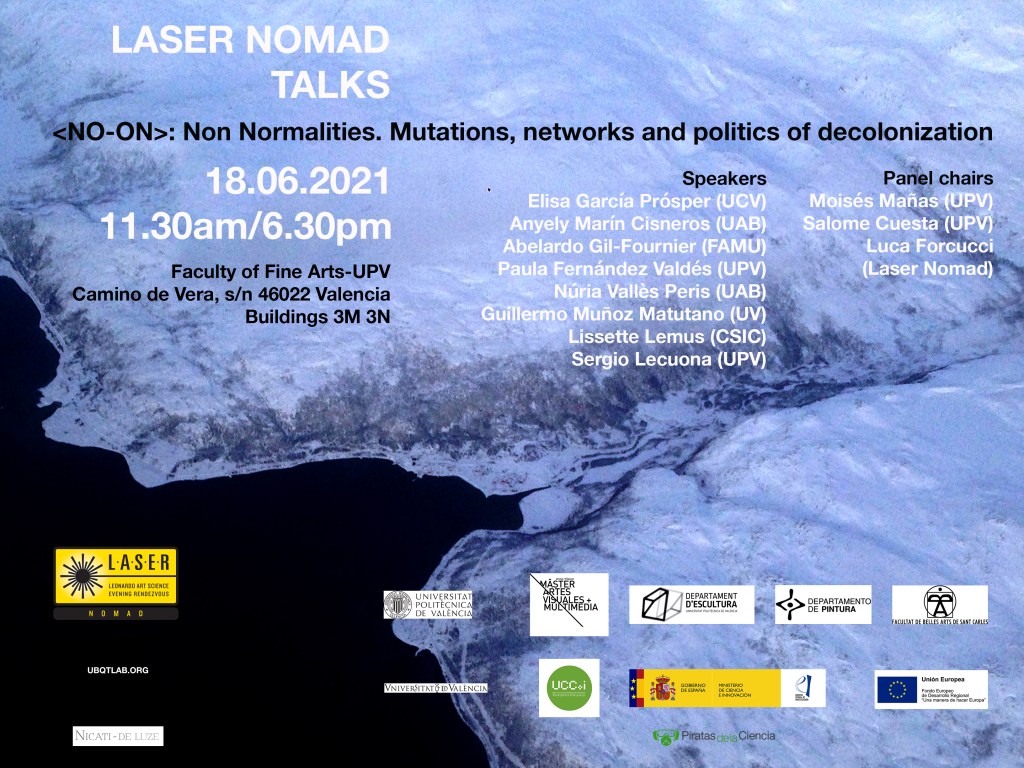
After a year, things have quite changed since the pre- pandemic ‘normal’ life we had. Social behaviours, social injustice, gender and economical inequalities, and psychological effects of the current situation still have to be studied in the human biosphere. However, vaccines were created in a record time, workers and students have moved to the home office, at least some or those who can, and won’t probably easily go back.
What about the earth biosphere’s mutations? What is normal there, what is a network for Gaia? In his books Gaia: Eight Lectures on the New Climate Regime, Bruno Latour insists on climate mutations, and with his book Critical Zones – The Science and Politics of Landing on Earth, he mentions the new revolution that comes when thinking over what it means to be earthly nowadays. These issues will definitely inform our behaviours in the near post-anthropocentric future, but also how we will integrate them in our political opening to our collective future and our interconnected knowledges and cultures. Moreover, at a time when a rover and that some of us are preparing to land on Mars.
<NO-ON>: No-Normalidades. Mutaciones, redes y política de la descolonización.
En tan solo un año, nuestra vida ha cambiado dramáticamente desde aquella vida normal pre-pandémica. Los comportamientos sociales, la injusticia social, las desigualdades económicas o de género, los efectos psicológicos de esta etapa aún tienen que ser analizados dentro de la biosfera humana. Sin embargo, las vacunas se han desarrollado en un tiempo record, los trabajadores y estudiantes se han trasladado a su casa-oficina, al menos aquellos que pueden, y no volverán de allí fácilmente.
Pero ¿cuáles son las mutaciones inflingidas en la bioesfera terrestre? ¿Cuál es su normalidad? ¿Cuál es la red en Gaia? En su libro “Facing Gaia: Eight Lectures on the New Climatic Regime”, Bruno Latour insiste sobre las mutaciones climáticas, y con la edición del libro “Critical Zones – The Science and Politics of Landing on Earth” advierte sobre la revolución que aparece al analizar los significados de la actual condición terrestre. Todos estos conflictos definen nuevas rutas para identificar comportamientos e identidades de nuestro futuro post-antropocéntrico, pero también para integrarlas como vías políticas que abran un futuro colectivo definido por conocimientos y culturas interconectadas. Más aún cuando, en paralelo, los rovers y algunos de nosotros se preparan para colonizar Marte.
Speakers
Panel 1: Archeology, Science or Fiction. Time to interpret and re-understand science.
Elisa García Prosper (UCV)
Short Bio: Elisa García Prósper, PhD in Archaeology from the University of Valencia (UV), Specialist in Forensic Anthropology from the Complutense University of Madrid (UCM), Associate professor of Criminology at the Catholic University of Valencia (UCV), and director of the research group Grupo Paleolab® (Funerary Archaeology, Paleopathology, Physical and forensic Anthropology).
Theme: Forensic archaeology and anthropology. Two tools for the future.
Archaeology is a science that has traditionally been considered as belonging to the area of knowledge of the humanities. For its part, forensic anthropology derives directly from osteoarchaeology, or explained in another way, from classical physical anthropology, the science in charge of bioanthropologically identifying the skeletons discovered by Archaeology. Both disciplines are inseparable, the information they offer is of great value for history since it allows us to reconstruct the past through its protagonists. For years both disciplines have also been perfectly combined in the field of forensic sciences and human rights, constituting a fundamental tool for the investigation of missing persons and their restitution to society.
Anyely Marín Cisneros (UAB)
Short Bio: Anyely Marín Cisneros combines a commitment to decolonial and black feminist methodologies in pedagogical spaces with her academic research on the relationship between a politics of the body and the historical racial logics of science. She has a master’s degree in Critical Theory and Museum Studies, and is currently a student at the UAB History of Science doctoral program, where she teaches in the History, Gender and Medicine seminar. Since 2014 she has co-run the artistic research collective @Criticaldías.
Theme: Deracialise the eye
In this talk race and racism will be situated throughout history as an affective algorithm of difference and indifference, while paying attention to the distinctive set of socio-technical conditions that give rise to 21st century racism. Departing from an introduction to the historical Spanish ‘Black Codes’, a few tools will be proposed towards the deracialising of the eye in the present.
Abelardo Gil-Fournier (FAMU)
Artist and researcher, he holds a PhD from the Winchester School of Art and is a postdoc at the School of Film and TV in Prague where he is working with theorist Jussi Parikka on a book on vegetal archaeology of the contemporary image. His artistic practice approaches the materiality of media from a wide variety of techniques and formats, and has been shown at international festivals and exhibitions.
Theme: Excavating the vegetal image. A media archaeological approach
The use of early photographic and moving image techniques in the context of the scientific analysis of plant growth unveils a space of transfers between the living and the animate. This entwining can be observed too in other domains such as agriculture and landscape management. An experimental media archaeological excavation of this transfer, presented as a form of artistic research, brings in additional dimensions to the nuances of this entanglement. Its links to a wider cultural context will be emphasized, including science fiction and speculative design.
Panel 2: Interdisciplinary tools and resources. Caring to the network, to the knowledge and to the media.
Paula Fernández Valdés
Short Bio: Graduate in Conservation and Restoration of Cultural Heritage from the Complutense University of Madrid and Master in Conservation and Restoration of Cultural Heritage (2017-2019) from the Universitat Politècnica de València. She is currently pursuing a PhD in Art: Production and Research with a Predoctoral Grant (FPI-UPV) at the same University and is part of the MICIU I+D+i EShID Project. Her research focuses on the preservation of technological art and copyright.
Theme: Preservation of technological art: the curator as a mediator of collective knowledge
Works of art produced at the art-science intersection are increasingly present in the so-called Art World, both in the private sphere and in public institutions, and have undoubtedly become part of our collective culture and memory. Moreover, the restrictions imposed during the covid-19 pandemic have caused a massive digital transition of the cultural industry, which has been forced to seek new ways for the commercialization and dissemination of artistic production. In this context, the curator must pursue new strategies to ensure, on the one hand, the preservation of technological devices, which are fragile and obsolescent in nature, and, on the other hand, the community’s access to its own culture, mediating between the work of art and its collective implications.
Núria Vallès Peris (UAB)
Short Bio: Phd. Sociologist, she is a researcher in the Barcelona Science and Technology Research Group (STS-b) at Universitat Autònoma de Barcelona. Her main research work is focused on the ethical and social controversies in social robotics, from the study of imaginaries and the ethics of care.
Theme: In her presentation she will propose an approach to the robotics of care, based on the alignment between the ethics of care and STS. From this approach, artefacts can be understood as materialised morality, which opens up new controversies in the introduction of these artefacts in the service of good care and good living.
Short Bio: Lissette Lemus is technology transfer manager at the Artificial Intelligence Research Institute of CSIC and co-director of the ARTIFICIA platform. She is committed to digital transformation from a social and ethical perspective promoting the use of Artificial Intelligence research results to social challenges such as social integration, citizen participation, mental health and the development of more open and collaborative models in areas such as education and creativity. Born in Havana, she has developed her career as a computer engineer in research centers, startups and in her own entrepreneurship projects.
Theme: We are constantly shaping our present and future with a systematic innovation that changes our behaviors’ nature. One of the most sophisticated and complex human behaviors is creativity, and we are redefining it by implementing new advances in science and technology, particularly through Artificial Intelligence. In this intervention, we will focus on how AI is configuring creativity. What is augmented creativity, how artists and other collectives use AI to analyze from a critical point of view the social and political powers. Can democracy, participation, civic action be more powerful with AI?
Guillermo Muñoz Matutano (UV)
Short Bio: Senior researcher in the Institute of Materials Science (ICMUV), Universitat de Valencia. PhD in physics, in the field of condensed matter, semiconductor physics and quantum optics. Principal Investigator (PI) of the project “Two-Dimensional Semiconductor Photonic Dots – 2D SPD” funded by the Spanish Ministry of Science and Innovation. Student of the Master’s Degree in Philosophy for Contemporary Challenges (Universitat Oberta de Catalunya).
Theme: Decolonizing quantum technologies. Narratives, metaphors and critical thinking from the quantum world.
Quantum physics and quantum technologies are revolutionizing our understanding and our mutual relations in the world/universe. There is an increasing interest in developing key research areas, usually divided into quantum computing, quantum communication, quantum metrology and quantum simulation. However, new possible exploitation of the quantum features arises when including arts and humanities as possible allies. Quantum technologies offers a new paradigm to build new narratives and explore powerful metaphors for critical thinking and empowering our communities.
Sergio Lecuona (UPV)
Artist and PhD fellow from the research group “Laboratorio de Luz” Universitat Politècnica de València, he is currently investigating the conjunction of data, sound art, music and new technologies, towards the upcoming ways of sound performance and composition.
Theme: Beyond the sound practices of Artificial Intelligence. Artificial Intelligence technologies are slowly getting introduced in every corner of our living, so is sound art and music practices. But these implementations don’t lead just to a higher level of automatization. With the new methodologies and concepts that these technologies unfold, ideas such as authorship, creativity and collaboration become susceptible to mutation.
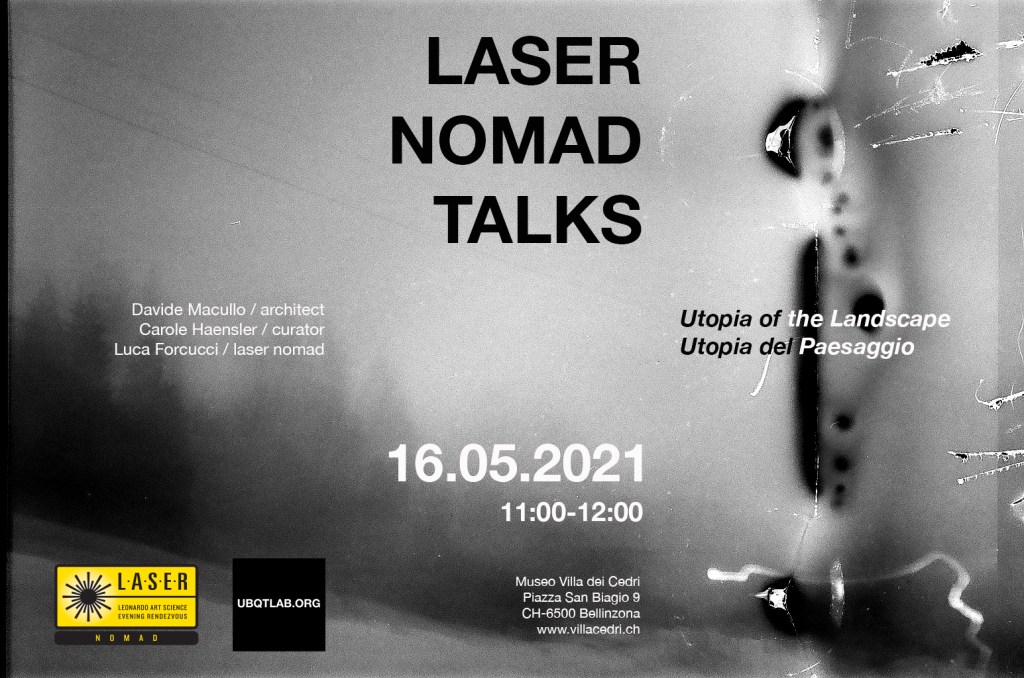
Machines, algorithms and data are increasingly entering the landscape. They are already present in our intimate spaces. During the current pandemic situation, algorithms and data are omnipresent due to our online presence. Further, our landscape is indeed becoming monasterial, because the pandemic forces populations to self-isolate. The utopian landscape is perhaps within oneself then ?
Ticino is the Italian speaking and southern part of Switzerland. In term of transit (cultural and economic), it plays a role as a geographical articulation between North and South of Europe. Inside, deep inside, in the entrails of the landscape of Ticino, the new world longest 57 km long railway San Gottardo tunnel was recently achieved. A utopian invisible landscape made by men and machines. On the surface, the Ticino architecture school is widely acclaimed worldwide since the 1960’s, an architecture, which has been described also as an architecture of resistance. In addition, since the early 1900’s the artistic avant-garde was indeed present in Ticino with the Dadaists for example, and Bauhaus architecture emerged there too between the two world wars. What to expect from an architecture when insights from augmented intelligence, cognition, data and machines are applied to it ? What kind of utopian landscape shall emerge in a not so distant future ?
Davide Macullo (b. Giornico, CH, 1965) is a Swiss architect. His international design studio, Davide Macullo Architects, based in Lugano, Switzerland, was founded in 2000.
The ethos of the studio is one that promotes an open and cultural exchange with architects, artists and collaborators coming from different backgrounds. The diverse contributions promote a dialogue between the specificity of the project, the universality of the contexts and the psychology of space. This ‘drawing from context’ encourages and helps sustain a local-meets-global, embracing approach to architecture, spanning from the theoretical to the practical and detail level, to territorial analysis, pedagogy and sustainability in construction.
The work of the studio includes graphic design, branding consulting and custom designed furniture, and spans to the creation of contemporary art collections for clients. They have also recently produced a customized collection of rugs for the new Chenot Palace Weggis, and a large series of Davide’s drawings (ca. 400nr.) is included in its art collection.
In Rossa, Canton Grisons, he is a founding member of the Rossarte foundation which promotes public and private interventions in situ by international artists to influence daily life through contemporary art.
The first building is the Swisshouse XXXII (Sinusoïde) created in collaboration with Daniel Buren and Mario Cristiani of Galleria Continua.
Prior to the foundation of his own studio, he was project architect in the atelier of Mario Botta with responsibility for over 200 international projects worldwide (1990-2010).
abstract
We are living in an historical moment of epochal change, where the attitude to inhabit the earth, built over millennia, does not reflect the current and future conditions. With the advent of new technologies, unimaginable scientific discoveries and the doubling of the world population, man faces, (with no way back), a completely new universe, in which he must affront from all points of view, taking care of all ecologies. Our generation has the urgent duty to prepare this new territory to allow new generations build on solid foundations and above all for our psychological health, manage an environment that has become extremely complex and potentially hostile.
The development of think tanks and laboratories focused on social sensitivity, inclusive of historical and scientific knowledge, are the terrain on which we move to respond to the call as citizens. The Rossa project in Valle Calanca seeks solutions that go beyond the economic revival of a region, bowing to the principle expressed by Bruno Munari, that a civilized people lives in the midst of their art.
Carole Haensler, born in Lausanne in 1974, was appointed curator of the Museo Civico Villa dei Cedri in Bellinzona in 2013, with the task of conserving and enhancing the artistic heritage of the Museum, redefining and strengthening the identity of the institution, developing the offer of cultural mediation as well as synergies with other city and regional cultural institutions. She also accompanied the creation of the Ente autonomo di diritto pubblico Bellinzona Musei – the new administrative structure created in 2017 that manages the Museo Villa dei Cedri – of which she is director since 1.01.2018.
Holder of a master’s degree in art history and archaeology from the University of Neuchâtel (1999), she has worked for various private and public collections in Switzerland, as well as the Thyssen-Bornemisza Foundation in Lugano and Thyssen-Bornemisza Art Contemporary – TBA21 -, Vienna, the Zentrum Paul Klee in Bern and the Centre for Contemporary Art in Geneva. She is mainly specialized in modern and contemporary art, in particular in French art and literature of the second half of the 19th century and in French and German art of the period 1900-1950, and focussed her programme at Museo Villa dei Cedri on the renewal of art language and expression after Second World War. She has introduced thematic exhibitions of contemporary art in Bellinzona seeking to reflect the concerns of art and contemporary society: “Dimensione Disegno. Posizioni contemporanee” (2016), “In(de)finiti luoghi. Utopie architettoniche e realtà artistiche” (2017), “Memoria del Sublime. Il paesaggio nel secolo XXI” (2019) e “Icone vegetali. Arte e botanica nel secolo XXI” (to come in 2022).
abstract
The Museo Villa dei Cedri is an interesting starting point to understand how to connect artistic, architectural and natural heritage. Starting from the considerations that led to the thematic exhibitions “Memoria del Sublime. Il paesaggio nel secolo XXI” (2019) and “Icone vegetali. Arte e Botanica nel secolo XXI” (to come in spring 2022), the presentation will also explore the role of the museum in its own ecosystem, which is that of art, and its ability to position itself as a place of critical reflection on contemporary society. Does the Museum have a role to play in building the future of society? And can it be an active role?
We explore the links between art and science through an exhibition, a talk and a concert. The 2020s of the 21st century have apparently wrecked our experience of the normality. Invisibility and Omnipresence refers here, among other possibilities, to organisms / parasites / viruses, perceptions (virtuality, augmented or not), social and territorial prejudices (racisms), or our biosphere for example. What are the major challenges waiting for us in such context ? What will be the new normality ? Where is the reality, is it a virtual construction ? Which is the role of consciousness in such context ?
Pictures: Xavier Voirol
Jeremy Narby Indigenous people mention since a long time ago, the existence of an invisible world supporting the world we perceive, establishing it to a certain extent, and with which we needs to negotiate. Science, on the other hand, tell us about DNA molecules and virus, which are actually visible, and influencing our life. We know now that all the living beings of the planet, including viruses, are integrally part of the ecological web of the planet, and altogether we are part of a planetary mega entity fully interconnected: the biosphere. This delicate layer of life surrounding the planet is self regulated on multiple levels, but its scale is so broad that we struggle to perceive it. Could a dialogue between science and Indigenous knowledge extend our way of dealing with the world, and help us to conceive the biosphere too ?
Biography In charge of Amazonian projects for « Nouvelle Planète », Jeremy Narby is an anthropologist, who supports Indigenous amazonian people initiatives since thirty years.
Al Comet / Alain Monod / Mahadev Cometo In dialogue/interview with Luca Forcucci about his career as a musician with The Young Gods, his experiments with electronic music and lately his study in India of the sitar instrument. Moreover, Al Comet is a trained military pilot, who continues to fly.
Biography Member of The Young Gods during more than twenty years, Alain has contributed to define the industrial sound of the 1980s. In 2014, Al Comet leaves the Young Gods et focuses his energies on his very own self development under the name Mahadev Cometo. Always looking for new sonorities, he studies classical music in Benares. and publish a sitar record in 2017. Today, with his new generation modular sampler, he works on the elaboration of a new sitar album more revolutionary that ever “ the futur is now”.
Isabella Pasqualini
The environment shapes our experience of space in constant interaction with the body. Architectonic interiors amplify the perception of space through the bodily senses; an effect also known as embodiment. The interaction of the bodily senses with the space surrounding the body can be tested experimentally through the manipulation of multisensory stimulation and measured via a range of behaviors related to bodily self-consciousness. Through the association of egocentric, first-person view of a dancer to a virtual point of view, the choreography creates a virtual architecture. Isabella Pasqualini is an architect (ETHZ 2000) and a scientist with a PhD in architecture and cognitive neuroscience (EPFL 2012).
Biography Her works explore the mutual and intimate relationship between body and space using immersive and interactive multimedia, with a particular interest in the multisensory enhancement of the user’s horizon. For her post-doc project Visual Touches, touching Views at the Center of Neuroprosthetics EPFL, she received the prestigious fellowship grant from the cogito foundation in 2013. Currently, she is a faculty member of the >> LeaV at the École Nationale Supérieure d’Architecture de Versailles and of the NAAD Master class at IUAV University of Venice. She has been a guest researcher at the Laboratory of Cognitive Neuroscience EPFL. Isabella has planned a new City in Angola and built a temporary bank building in Luanda. She is a scientific reviewer, and works as an expert for Innosuisse as well as other innovation platforms.
Bruno Herbelin Our body is our anchor in the world. Neuroscience of bodily self-consciousness investigates how this primitive subjective experience emerges into consciousness and, thanks to recent developments using new technologies for evaluating the impact of artificially mediated disruptions of this subjective experience, is now providing the first pieces of evidence of its complexity and multisensory aspects. Virtual Reality is particularly suited for this experimental research on bodily consciousness but, in parallel, it follows a massive industrial development that neglects the impact it can have on our experience of the self. Self-body representation is, for technical reasons, simply ignored in most VR experiences, although in effect this means providing the user with the strong and uncanny experience of invisibility. What I question and propose to discuss here, is if it makes sense to consider VR as the ultimate technology of telepresence (and omnipresence) if in practice it abstracts us and removes our body from the world.
Biography Bruno Herbelin is senior researcher in virtual reality and cognitive neuroscience in the laboratory of Prof. O. Blanke at the École Polytechnique Fédérale de Lausanne (EPFL, Switzerland). From 2012 to 2019, he was deputy director of the EPFL Center for Neuroprosthetics. From 2005 to 2009, he was Assistant Professor at Medialogy Department of Aalborg University, Denmark. He obtained his PhD from EPFL School of Computer and Communications in 2005 for his research work on virtual reality exposure therapy under the supervision of Prof. D. Thallmann (Virtual Reality Laboratory).
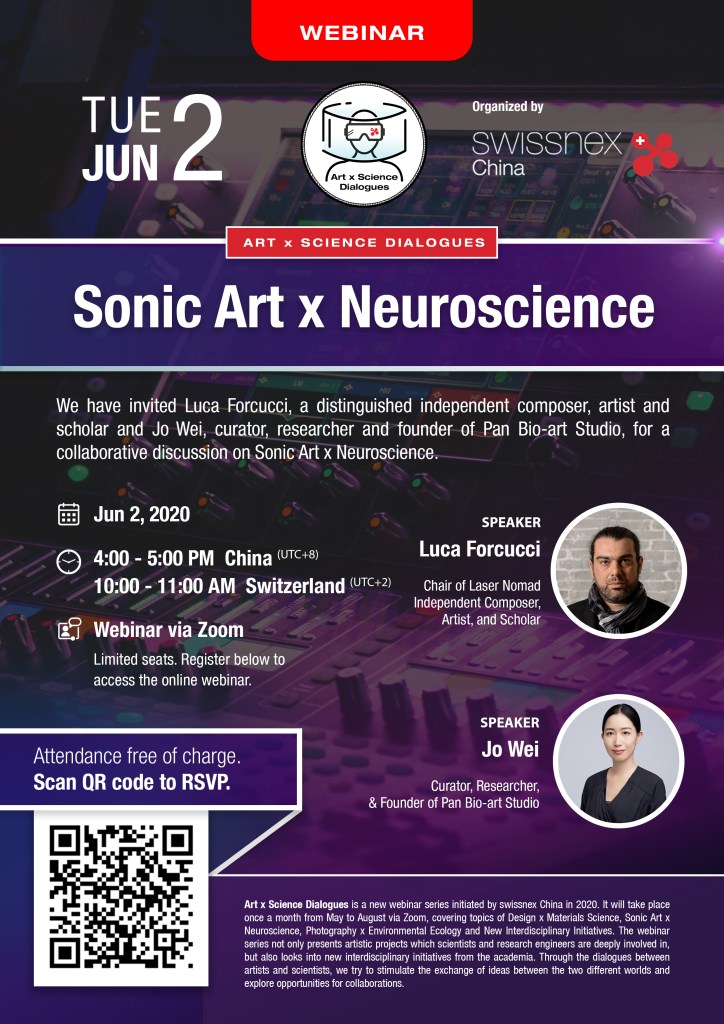
Artists explore sound in its pure state, simultaneously bridging and muddling barriers between sound, noise, and music in the contemporary or historical sense. Others investigate the political and cultural implications of certain sounds, using their work to bring human rights to the fore. This event puts spotlight on yet another group of artists who connects Sonic Arts with Neuroscience, attempting to unveil the mystery of human brain and consciousness by playing with the frequency and wavelength of a soundwave.



 u(bqt)lab